
Early Season vs Late Season Duck Decoy Strategies: Adjusting Your Spread for Success
There is a big difference between the ducks I hunt at the beginning of the season and the birds I am chasing a couple months later. Early on, ducks seem a little more willing to make mistakes. They have not spent weeks dodging hunters, staring at spinning-wing decoys, and getting shot at over every good-looking pocket of water they find.
By late season, that changes.
Those same birds have migrated hundreds of miles, survived a pile of hunting pressure, and probably looked at more waterfowl decoy spreads than we would ever care to count. A setup that worked perfectly in October can suddenly look completely wrong by December. This is why my duck decoy strategies change as the season moves along. I have never been a believer in setting the same decoys the same way from opening day until the final weekend. The birds change, hunting pressure changes, and your spread needs to change with them.
Early Season Duck Hunting: Give Them Something to See
During the first part of the season, I generally like a little more activity in my spread. Early season duck hunting often means dealing with birds that are traveling in smaller groups, moving between feeding and loafing areas, and reacting well to other ducks that appear comfortable and active. This is when I am much more willing to use visible motion and spread my decoys out enough that passing birds can pick them up from a distance.
A spinning-wing decoy can be extremely effective during this period. I will usually position one where incoming ducks can see it easily, but I do not like putting it directly in the hole where I expect birds to finish. I want the flash to grab their attention, then let the rest of the spread lead them into range.
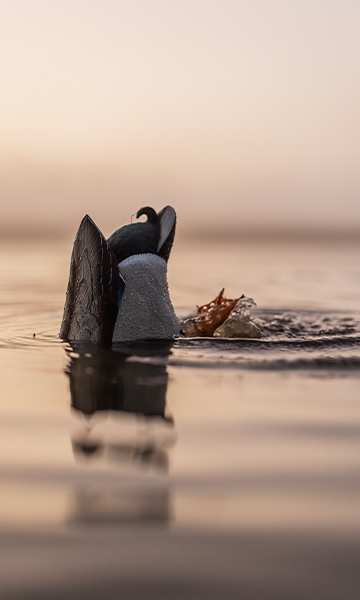
Water movement is another big part of my early season duck decoy setup. A perfectly still spread on a dead-calm morning can look unnatural. A jerk cord, swimming decoy, or other motion duck decoy can put ripples across the water and make an otherwise lifeless spread look much more believable. Early in the year, I am trying to create the impression that ducks have found a safe, active place to feed or rest.
Match Your Waterfowl Decoy Spread to Real Ducks
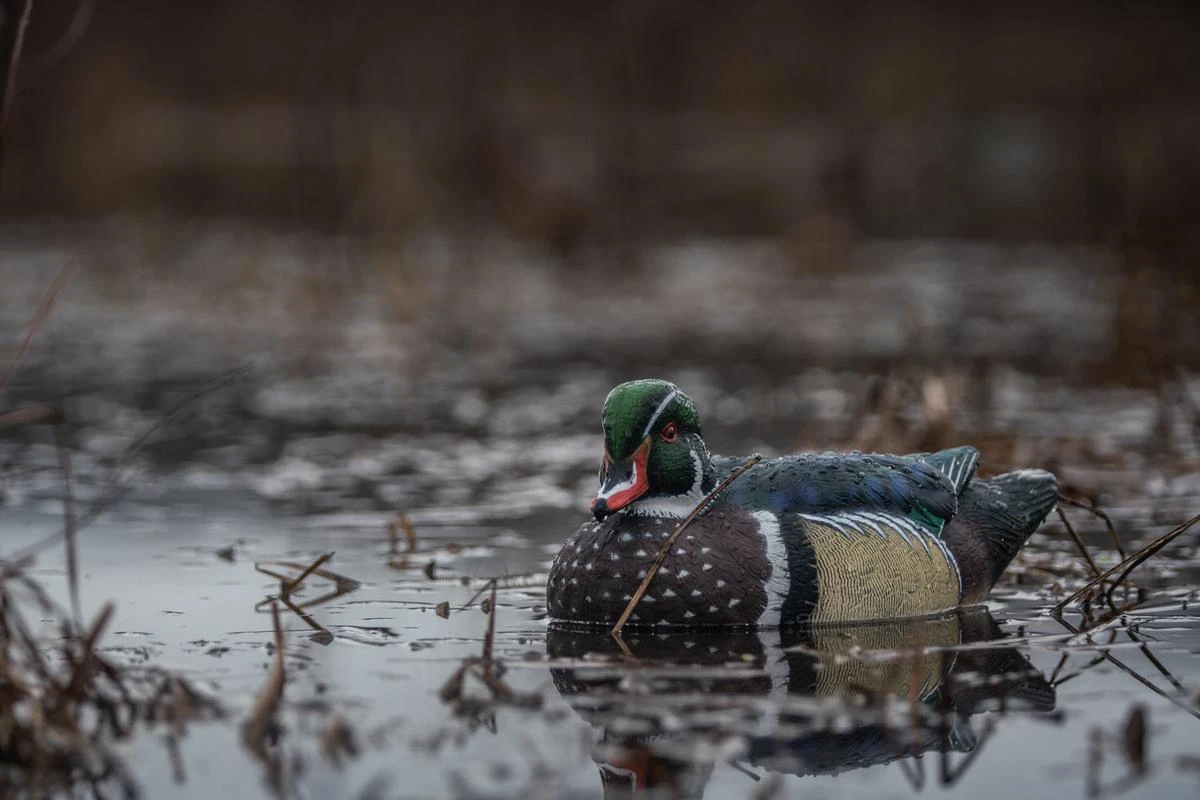
One mistake I see hunters make is deciding how many decoys they are going to use before they even look at what real ducks are doing. I would rather let the birds tell me. If I am scouting and seeing groups of six or eight ducks scattered around little potholes, I probably do not need four dozen decoys packed into one spot. If birds are stacking into a larger feeding area, a bigger waterfowl decoy spread may make a lot more sense.
The same thing applies during migration.
There are days when fresh ducks are moving and a bigger spread can grab birds from a long way off. On other days, local ducks are simply bouncing between familiar spots. Those birds may respond much better to a smaller, quieter setup. The best duck decoy strategy is not always the biggest one. It is the one that looks like what the birds expect to see that day.
Late Season Duck Hunting: Tone Everything Down
By late season, I start thinking almost completely different. Late season ducks have been educated. They have seen spinning wings flashing in marshes, giant blocks of decoys sitting in open water, and hunters tucked underneath all of it. If something looks wrong, late season ducks have no problem swinging once and leaving. This is when I start toning things down.
Instead of automatically running a big spread, I may use a dozen decoys or even fewer in a tight little group. I especially like this approach on small rivers, flooded timber, backwaters, and little pockets where pressured birds are looking for somewhere quiet. My use of motion duck decoys changes too.
There are still days when a spinning-wing decoy works during late season duck hunting, especially when fresh migration birds show up, but I pay much closer attention to how ducks react. If birds start flaring, sliding away, or refusing to finish, the spinner gets shut off or pulled. Late in the year, subtle water movement can sometimes be much more convincing than aggressive flash. A little movement from a jerk cord may be all it takes.
Build Your Duck Decoy Setup Around the Landing Zone
No matter what point of the season I am hunting, I always think about the landing zone. Your decoys should help steer ducks toward a place where you can make a clean shot.
Wind is a major factor. Ducks generally want to finish into the wind, so I arrange my spread around that approach whenever possible. A loose J-hook, U-shape, or two separate groups can naturally create an open landing pocket. I do not get too hung up on making the spread look perfect from above, though.
Real ducks rarely sit in perfect patterns. Some birds are tight together. Others drift off by themselves. A few may be feeding while the rest are loafing. I like building some of that randomness into my waterfowl decoy spread. Late in the season especially, a setup that looks too organized can start to look artificial.
Watch the Ducks and Adjust
Probably the most important duck decoy strategy I can share is to watch what the birds are telling you. If ducks are dropping altitude, committing, and finishing, leave things alone. If every group reaches 60 yards, slides sideways, and leaves, something needs to change. Maybe the landing hole is too small. Maybe there is too much motion. Maybe your decoys need to move farther upwind. Sometimes simply pulling a handful of decoys or moving a spinner can completely change the morning.
I have had plenty of hunts where the spread I thought looked perfect did not fool a single duck until we changed something.
This is part of duck hunting.
Let the Season Change Your Duck Decoy Strategies
There is no magic duck decoy setup that works from opening day through the final week of the season. Early in the year, I generally want visibility, energy, and enough motion to grab attention. As hunting pressure builds, I start leaning toward smaller spreads, subtle movement, and setups that look less like something ducks have already survived.
The hunters who consistently finish birds are usually the ones willing to move a decoy, shut off a spinner, open the landing pocket, or completely rebuild the spread when ducks show them something is wrong. That willingness to adjust matters whether you are hunting opening weekend or breaking ice in December.
The season changes. The ducks change. Your spread should too.