
How to Build a Realistic Duck Decoy Spread: When and Where to Add Motion
How to Build a Realistic Duck Decoy Spread: When and Where to Add Motion
By Ryan Fair
I have seen duck spreads that looked perfect from the blind and absolutely terrible once the birds started working them. Everything was lined up, every decoy was facing the right direction, and from twenty yards away it looked great. The ducks apparently had a different opinion.
That is one of the biggest lessons I have learned about building my decoy spreads. We are not setting decoys for ourselves. We are trying to make a group of plastic ducks look alive from several hundred feet in the air. While real ducks rarely sit perfectly still, are evenly spaced and all pointed the same direction. Some feed. Some swim. A couple sit off by themselves. Others bunch together. Building a realistic spread means copying those little details, then using motion decoys where they actually help instead of adding movement just because we can.
Start With What the Ducks Are Already Doing
Before worrying about a J-hook, U-shape or any other traditional duck hunting decoy setup, I like to think about how birds naturally use the area. If I’m hunting a small marsh where ducks are dropping into little pockets between vegetation, I probably do not need four dozen decoys covering every open spot. A dozen or two tucked naturally along the edges may look much better.
Open water is different. There, visibility becomes more important and I am more likely to spread birds out and use larger numbers. Avian-X Topflight Oversized Mallards, for example, are built with larger profiles that are easier for ducks to pick out over open water. The biggest thing is matching the situation.
I also try not to make every decoy look identical. Mixing feeders, swimmers, high heads and relaxed birds does a lot to make a waterfowl decoy spread look natural. The Avian-X Topflight lineup has several packs built around different natural postures, which makes it easier to break up that cookie-cutter look.
Leave Ducks Somewhere to Land
One of the easiest mistakes to make is throwing out so many decoys that there is no obvious place for incoming ducks to finish. You need a hole. That hole should be within comfortable shotgun range and, whenever possible, positioned so birds finish into the wind in front of me. Ducks may not always read the script, but they generally prefer landing into the wind.
Instead of thinking about making some perfect letter with my decoys, I think about creating groups. Maybe there are eight or ten birds on one side, another small group farther out and several relaxed birds tucked against the bank. The opening between them becomes the landing zone. That is one of my biggest decoy spread tips: quit worrying about whether your spread looks like a J and start asking whether it looks like ducks.
Motion Is Great, Until It Isn't
Nothing makes a dead-calm spread look fake faster than twenty motionless decoys sitting on glassy water. This is where motion duck decoys can completely change a hunt.
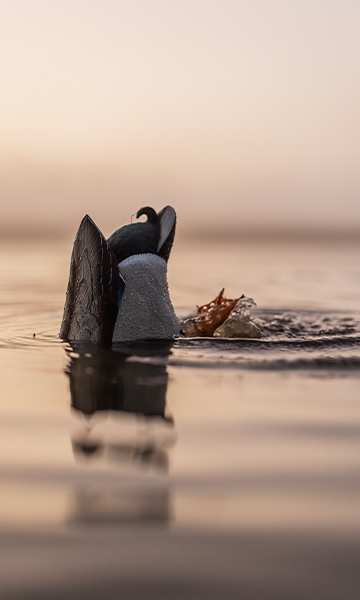
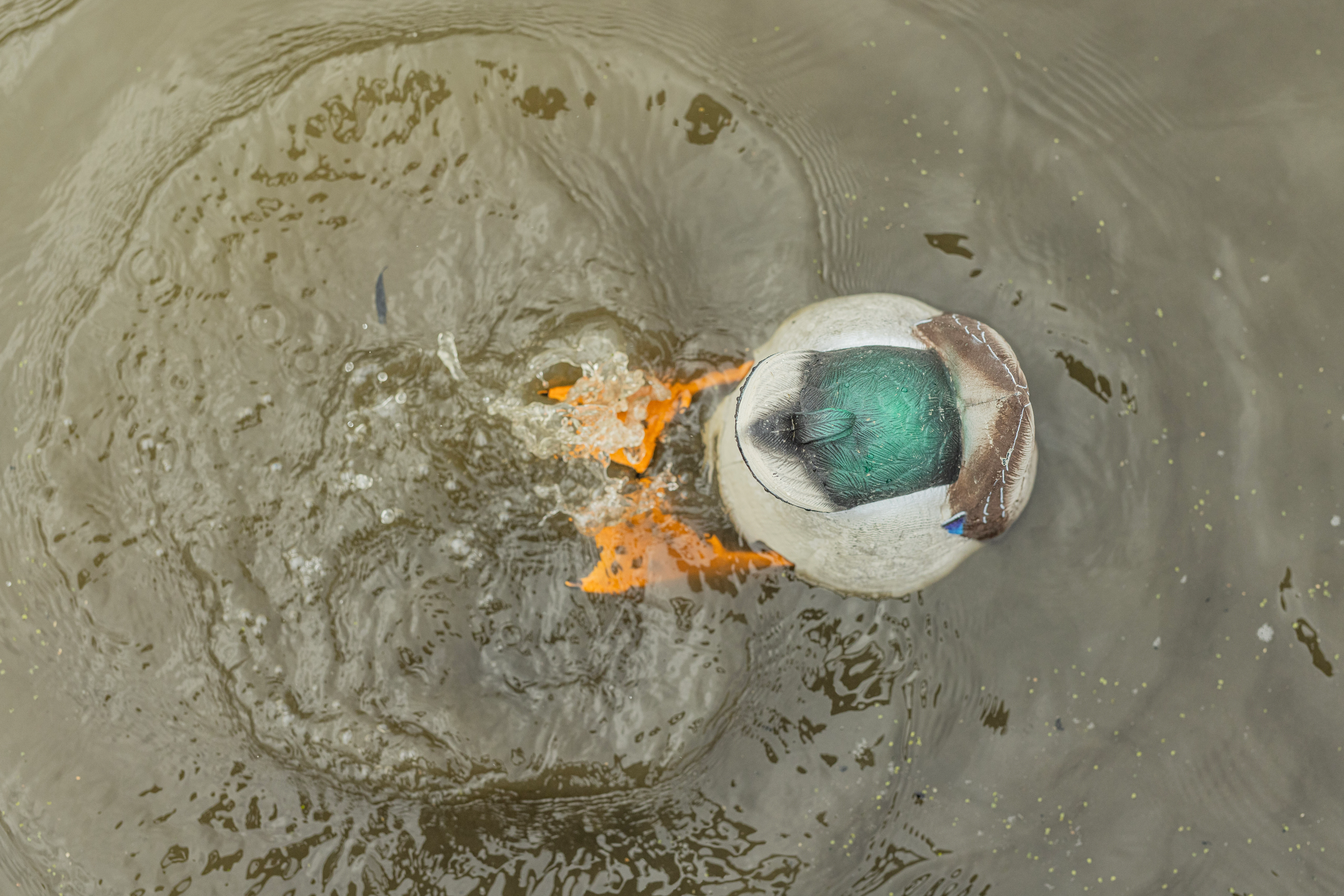
A swimmer, shaker or feeder can send ripples across the water and make several stationary decoys appear alive. I especially like subtle water movement on calm mornings because the motion spreads beyond the individual decoy. Avian-X currently offers options such as its Power Shaker, Power Swimmer and Power Butt Kicker for adding different kinds of movement to a spread.
The mistake is assuming more motion is automatically better. Sometimes one moving decoy is plenty. If ducks start circling, dropping altitude and then suddenly sliding away, I start changing things. Motion is one of the first variables I look at. Ducks that have been pressured for several weeks have probably seen plenty of gadgets. There are mornings when shutting something off can be more effective than adding another one.
Where I Put a Spinning Wing Decoy
A spinning wing decoy is still one of the best tools for grabbing attention, especially when birds are moving and visibility is important. But placement matters.
Early in the season, when younger ducks have not been educated by hunting pressure, I am usually more comfortable putting one close to the landing hole. The flash can catch birds from a long distance and give them something obvious to investigate. Avian-X's current motion lineup includes the Powerflight Mallard spinning-wing duck.
As the season progresses, I become much more willing to move a spinner away from where I actually want to shoot the birds. If ducks seem interested but consistently flare before finishing, move it thirty or forty yards off to the side. Let the movement grab their attention without making the spinner the centerpiece of the landing zone. And if they still do not like it?
Turn it off.
I have watched hunters keep changing calls, rearranging decoys and blaming the blind when the problem was sitting on a pole right in front of them flashing every few seconds.
Let the Wind Provide Free Motion
We sometimes get so wrapped up in battery-powered motion that we forget how much work a little wind will do for us. Properly rigged floating decoys will swim, turn and bob naturally with wind and current. Avian-X uses weight-forward swim keels on its Topflight floating decoys to help create natural water movement, and even small movements like that can make the overall spread look more convincing.
On a breezy morning, I may not need much powered motion at all. On a dead-calm morning, the exact opposite might be true. That is why I never treat motion as something that has to be in exactly the same place on every hunt. Conditions change, and the spread needs to change with them.
Watch the Ducks and Make Adjustments
The best duck decoy spread is not necessarily the one you put out before shooting light. It is the one you eventually end up with after listening to what the ducks are telling you. If birds are locking up and finishing, leave it alone.
If they keep circling without committing, something is making them uncomfortable. Maybe your landing hole is too tight. Maybe the decoys are too evenly spaced. Maybe the spinner needs moved. Maybe you need more subtle water movement. Or maybe you simply need fewer decoys. I would rather change one thing at a time than completely tear apart a spread. That way I can actually see what makes a difference.
There really is no magic duck hunting decoy setup that works everywhere. A realistic waterfowl decoy spread comes from matching what real ducks are doing, leaving them an easy place to land and adding movement where it makes sense.
Sometimes that means a spinning wing decoy flashing over the spread. Other mornings it means nothing more than a few feeders rocking in the wind and one swimmer putting ripples across the hole. The ducks will usually tell you which one they want.
You just have to pay attention.